Industrial SEO: make products, expertise and applications discoverable
A SEO guide for manufacturers and manufacturing companies: how to organize catalogs, specifications, applications and technical content to generate qualified contacts.
Webita SEO
Turn content into organic visibility and qualified leads
Align content, technical structure and SEO priorities with a practical growth roadmap.
Indice: Industrial SEO and SEO B2B are not the same thing
Let’s discuss your project
If this resource touches a strategic topic for your business, get in touch and we can evaluate the next steps.
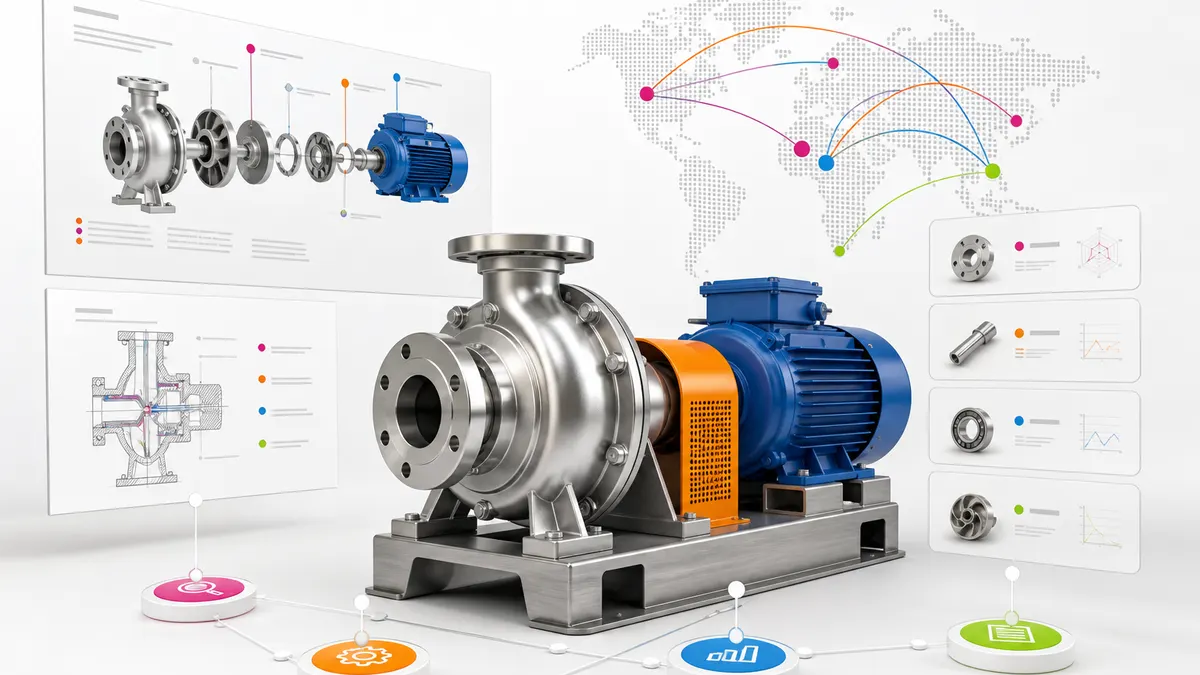
Industrial SEO makes accessible information that often exists in the company but are distributed among catalogs, technical cards, PDFs, drawings, commercial presentations and people's knowledge. The goal is not to attract generic traffic: it is to be found by designers, buyers, maintainers, distributors and decision makers when looking for a component, application or productive competence.
The research may be very specific and not frequent, but precede high-value bids. To intercept them, the site must accurately describe what is produced, for what operating conditions, in which markets and with what constraints.
Industrial SEO and SEO B2B are not the same thing
Each industrial company operates in the B2B, but not every B2B strategy must manage product families, codes, tolerances, materials, regulations, technical documentation and distribution networks. In industrial SEO the information structure is part of the product.
The guide on SEO for B2B companies deepens buyer journeys and lead generation; here the focus is to make a complex technical offer understandable without trivializing it.
Starting from the language used by technicians and market
Internal names do not always coincide with those sought. A product code known in the company can be unknown outside; the same solution can be described by component, function, material, process, problem or application industry.
Searching for queries should combine different sources:
- catalogues and taxonomies already used;
- requests received from sales and technical assistance;
- specifications present in specifications and competitions;
- terms used by distributors and competitors;
- research emerged in Search Console and internal research;
- linguistic variants and units of measurement of the markets served.
The comparison with the SERP serves to distinguish who wants to buy, who searches for documentation, who needs to solve a fault and who is still defining the appropriate technology.
Architecture: product families, applications and sectors
An industrial site should not force everyone to enter the catalog in the same way. Some users know the product; others start from the application or process. They are complementary paths, to be connected without replicating the same description on dozens of pages.
Product family pages
They must explain variants, selection criteria, performance, compatibility and connections to individual configurations. They are often the balance between generic queries and very specific tabs.
Pages
They describe the operating problem, the conditions of use and why a solution is adequate. A “pompe” page and a “movementation of abrasive fluids” page answer different questions, even if they lead to the same range.
Pages
They make sense when requirements, terminology, regulations or purchasing process really change. Only replace the name of the sector creates weak pages. Specific content, authorized examples and links to relevant products are required.
HTML and PDF techniques must work together
I PDFs are useful for downloading, printing and sharing, but often become the only source of details. An HTML page should contain the information necessary to understand the product: description, characteristics, fields of use, main specifications, variants, related documents and technical contact.
The PDF can deepen tables, drawings and instructions. Title, metadata, file name and link to the document should be descriptive. When a tab is replaced, you have to manage the URL and links; leaving multiple uncontrolled versions online generates confusion for users and engines.
Technical tables must remain readable even on mobile and, when possible, available as text instead of images. A quoted design may remain graphic, but decisive information should not be hidden in unaccessible scans.
Product specifications and codes: Avoid blank pages
Generating a page for each code can be useful on large catalogs, but only if each URL offers sufficient information and a purpose. Pages with title and two replicated values risk being little useful and difficult to index.
Before indexing all configurations it is advisable to decide which variants have autonomous demand, which can live in a filter table and which require a page. Canonical, sitemap and internal linking must reflect this choice.
Distributors and content conflicts
Manufacturers and distributors often publish the same descriptions. The manufacturer can offer the most complete and updated source, but must avoid identical standard texts for everyone. Original information about selection, compatibility, maintenance and applications increases the page value.
The “where to buy” pages must distinguish markets, skills and contacts without creating geographical landings without substance. If the sale takes place through partners, the route must clarify who manages quote, availability and support.
International SEO for Industry
Literal translation is not enough. Technical terminology, standard, units, available ranges and role of distributors can change by country. The research must be carried out in the language of the market with the contribution of those who know local product and sales.
Distinct URLs, reciprocal hreflang, consistent canonicals and verifiable sitemaps help distribute the correct versions. It is essential to avoid an IP-based automatic selector to prevent users and crawlers from reaching a language.
Contents for engineers, procurement and management
stakeholders look for different levels of detail. The technician wants specifications, calculations and compatibility; the procurement assesses availability, continuity and conditions; the management considers risk, efficiency and return. Good architecture allows you to deepen without overloading each page.
Selection guides, comparisons between materials, maintenance procedures, technical glossaries and FAQ can intercept real needs. They must be reviewed by competent and up-to-date persons when changing range or regulations.
Fairs, sales network and organic research
SEO does not replace trade fairs and relationships. However, it can prepare and extend the effect. Pages dedicated to technologies, applications and news allow those who receive a contact to verify the company and deepen after the meeting.
The materials of the sales network also offer valuable data for the editorial plan: objections, terms used, comparisons and recurring questions are often more useful than a generic keyword list.
Measuring Industrial SEO
Metrics must comply with long sales cycles and offline conversions. In addition to impressions and clicks, it is useful to observe downloads of cards, visits to configurators, technical requests, contacts to distributors, returns to the site and associated opportunities.
A reduced volume does not imply poor value. A page on a critical component can receive few visits and contribute to very relevant requests. Analytics, CRM and commercial feedback must be read together.
Sustainable roadmap
- Invent catalog, PDF, codes, languages and indexed pages.
- Mapping internal terms, market queries and role needs.
- Define the architecture between products, applications and sectors.
- Choose which variants deserve indexable URLs.
- Bring essential technical information to the web.
- Fix duplicates, links, sitemaps, canonical and performance.
- Connect content, sales network and CRM.
- Measure qualified requests and update documentation.
The SEO Webita advice can support technical analysis, catalog structure and definition of priorities shared between marketing, IT and commercial.
Frequently Asked Questions
What companies can benefit from industrial SEO?
Manufacturers, manufacturing companies, component suppliers, planters and companies with complex catalogs or technical skills. It is particularly useful when buyers and technicians search online products, specifications, applications or suppliers before contacting the sales network.
Is it better to publish a page for each product code?
Not always. An autonomous page makes sense if it offers sufficient information and answers a search or a real path. Minor configurations can be managed in tables or selectors. The decision must drive sitemap, canonical and internal links.
I PDF of technical cards are placed on Google?
They can be indexed, but a complete HTML page offers more control over navigation, links, updates and conversion. The PDF remains useful as a downloadable document. The two resources should be coherent and connected clearly.
How do you manage multiple languages in an industrial site?
Terminology should be sought and validated by market, not only translated. Each language must have accessible URLs, localized content, reciprocal hreflang and consistent canonical. Legs, standards, units and contacts may require local adjustments.
Does Industrial SEO work with low volume queries?
Yes, if queries are relevant and close to a technical or commercial decision. In industrial markets, rare research can precede an important opportunity. This is why the value is measured also with lead quality and pipeline, not only with traffic.
How do SEO and trade fairs connect?
The content can prepare the fair, offer insights to contacts and maintain visible technology after the event. Questions and objections collected by the sales network also help you choose pages and guides with a real question.